A diesel generator converts diesel fuel into dependable electrical power, delivering critical backup power, supporting off-grid operations, and driving heavy industry worldwide. With the global market projected to reach $28.86 billion by 2030, diesel generator sets (gensets)remain the premier choice for facilities requiring high reliability, instant startup, and fuel efficiency.
Whether securing an uninterrupted power supply for a hospital or deploying prime power at an offshore drilling platform, choosing the right genset prevents costly downtime. This guide breaks down essential components, duty ratings, sizing rules, and practical maintenance tips for commercial and industrial buyers.
1. How a Diesel Generator Works & Key Components
A complete packaged generator set pairs a diesel engine with an alternator, supported by dedicated cooling, exhaust, and control systems:
The Engine: The powerhouse of the unit. It compresses diesel fuel under high pressure to combust without spark plugs, driving the crankshaft to generate rotational mechanical energy.
The Alternator (AC Generator): Converts mechanical energy into electricity. As the engine spins the rotor inside copper stator windings, electromagnetic induction generates a stable alternating current (AC).
Automatic Voltage Regulator (AVR): Stabilizes voltage output against fluctuating loads to protect sensitive equipment.
Fuel System: Includes storage tanks, transfer pumps, multi-stage water-separating filters, and precision injectors delivering atomized fuel.
Cooling & Exhaust Systems: Heavy-duty radiators and coolant loops keep the engine within safe operating temperatures, while industrial-grade mufflers vent combustion gases safely and suppress sound.
Digital Control Panel: Monitors voltage, frequency, oil pressure, and load levels, with automated start/stop functionality during utility power failure.
Core Component
Primary Function
Diesel Engine
Converts fuel into mechanical rotation
Alternator
Converts mechanical energy to electrical power via electromagnetic induction
Fuel System
Stores, filters, and precisely delivers fuel to cylinders
Cooling & Lubrication
Dissipates heat and prevents engine friction/wear
Control Panel & Battery
Monitors operating parameters and delivers cold-cranking power
2. Types of Diesel Generators: Open-Frame vs. Enclosed
Industrial buyers typically select enclosures based on installation site requirements and local noise regulations:
Open-Frame Generators: The engine and alternator are mounted on a rigid skid without a soundproof housing. These units provide maximum airflow and easy maintenance access at a lower initial cost. They are best suited for dedicated indoor generator rooms, remote construction sites, or industrial zones.
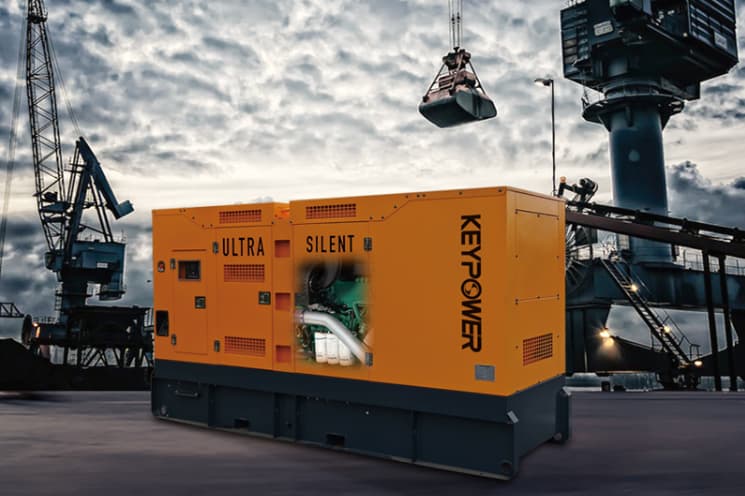
Canopy & Enclosed Generators: Equipped with heavy-gauge acoustic insulation and weatherproof casing, soundproof generators reduce operating decibels to comply with municipal noise codes. They resist moisture, dust, and extreme weather, allowing outdoor installation at hospitals, commercial buildings, and urban sites.
Containerized Gensets (20ft / 40ft): Standardized ISO container configurations provide turnkey, plug-and-play high-power capability for large mining operations, microgrids, and rental fleets.
3. Power Ratings & The 80% Sizing Rule
Industrial generators fall into three primary duty ratings defined by ISO 8528:
Standby Power: For emergency backup during grid outages (typically capped at 200–500 operating hours per year at variable loads).
Prime Power (PRP): For continuous, off-grid power supply with unlimited annual runtime and variable loads (e.g., remote mining, construction).
Continuous Power (COP): Designed to supply constant base-load power without interruption for utility and heavy manufacturing plants.
Calculating the Correct Capacity
Choosing an undersized unit leads to breaker trips and premature engine failure, while excessive oversizing causes fuel waste and exhaust "wet stacking".
To ensure safety and reliability, always apply the 80% Sizing Rule: your anticipated steady-state operational load should not exceed 80% of the generator's rated capacity. The remaining 20% acts as a reserve buffer for motor starting surges and voltage dips.
Rated Capacity (kW)
Safe Continuous Load (80% Rule)
Recommended Application
30 kW – 60 kW
24 kW – 48 kW
Small commercial sites, telecommunications, workshops
Data centers, manufacturing lines, heavy mining, marine drilling
4. Maintenance Checklist & Troubleshooting
A well-maintained diesel generator delivers a working lifespan of 10,000 to 30,000 operating hours (up to 20–30 years for standby units).
Routine Service Intervals
Daily / Pre-Start: Check engine oil, coolant levels, fuel lines for leaks, and ensure control panel alarm lights are cleared.
Every 250 Hours: Drain water separator, replace engine lubrication oil and oil filters, inspect air intake elements.
Every 500 Hours: Replace fuel filter cartridges, check fan belt tension, inspect battery terminal connections.
Monthly / Annual: Conduct a 30-minute test run under load (or perform load bank testing) to prevent carbon buildup.
Common Faults & Quick Checks
Won't Crank:43% of startup failures are caused by depleted or degraded starting batteries. Test battery terminal voltage and charger health first.
Engine Cranks but Won't Fire: Air in the fuel line, clogged fuel filter, or stale diesel fuel (fuel should be conditioned if stored over 12 months).
Overheating: Low coolant volume, radiator blockage, or loose fan belt.
Excessive Black Smoke: Clogged air filter, engine overload, or damaged fuel injectors.
5. Engineered Reliability: Why Partner with KEYPOWER?
A generator set is a long-term capital asset, making manufacturer build quality and parts support vital.
Founded in 1998, KEYPOWER operates an advanced manufacturing facility spanning over 66,000 square meters, producing more than 5,000 generating sets annually. Serving clients across 100+ countries, KEYPOWER pairs robust mechanical engineering with global tier-one engine and alternator brands:
World-Class Engine Options: Built with Cummins, Perkins, MTU, Volvo, Scania, Baudouin, and Yuchai engines.
Turnkey Customization: Open-skid, super-silent soundproof canopy, mobile trailer, and 20ft/40ft containerized sets ranging from 10 kVA to 3,000+ kVA.
Rigorous Testing: Every unit undergoes strict load testing, safety verification, and environmental compliance checks before dispatch.
Need an accurate load calculation or custom genset configuration?



 IPv6 network supported
 English
 English
 français
 Deutsch
 русский
 español
 português
 Nederlands
 العربية
 Polski
 中文
中文