
Blog
When choosing a diesel generator for an industrial facility, construction site, or commercial project, buyers need to consider more than power output and engine specifications. The generator enclosure also plays an important role in installation, noise control, equipment protection, and maintenance.
Two common options are containerized generators and silent generators. Although both use enclosed structures, they are designed to meet different project requirements. A containerized generator focuses on integrated equipment packaging and outdoor installation, while a silent generator is primarily designed to reduce operating noise.
Understanding the differences between these two configurations can help buyers select a suitable diesel generator for their operating environment and power requirements.
A containerized generator is a diesel generator set installed inside a specially designed container enclosure. It typically integrates the engine, alternator, control system, ventilation equipment, and other auxiliary components into a single packaged unit.
Containerized diesel generators are commonly available in 20-foot and 40-foot configurations. The enclosure provides space for the generator and supporting equipment while making transportation, installation, and equipment management more convenient for large-scale projects.
Unlike a conventional open-type generator, a containerized unit is designed as a more integrated power package. Depending on the project, it can also incorporate sound insulation, fuel systems, fire protection, and other optional equipment.
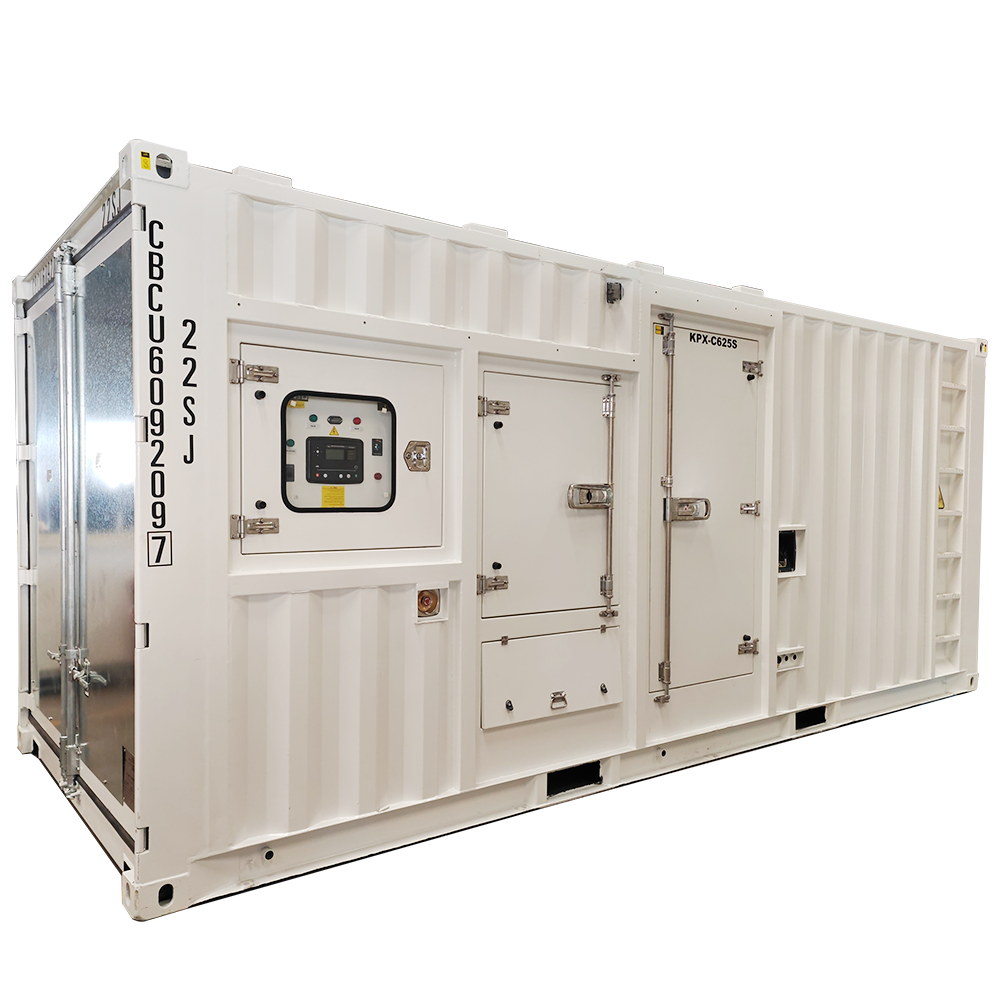
Integrated equipment arrangement: The container accommodates the generator set and supporting systems in one structure, helping simplify equipment layout and project installation.
Outdoor protection: A properly designed enclosure helps protect internal components against rain, dust, and other environmental exposure. Actual protection depends on the enclosure specifications.
Transportation convenience: Standard container dimensions provide a practical solution for shipping and handling large generator sets, subject to equipment weight and transportation requirements.
Flexible configuration: Containerized systems can be configured with ventilation, exhaust systems, fuel storage, control equipment, and acoustic treatment according to project needs.
KEYPOWER offers different containerized generator configurations for industrial and large-scale power applications. Buyers can explore the 20-foot container diesel generator range for available models and power ratings.
A silent generator, also called a soundproof diesel generator, is equipped with an acoustic enclosure designed to reduce operating noise. It is commonly used in locations where noise levels need to be controlled, such as commercial facilities, residential areas, and public infrastructure projects.
The enclosure normally incorporates sound-absorbing materials, an exhaust silencer, and specially designed air intake and discharge channels. These components help reduce noise from the engine, cooling fan, and exhaust system while maintaining the airflow required for engine operation.

Acoustic noise reduction: Sound-absorbing materials and exhaust silencers help reduce noise generated during generator operation.
Enclosed structure: The acoustic canopy surrounds the generator set, providing a compact enclosure without requiring a full container structure.
Equipment protection: The canopy helps protect internal components from external environmental exposure, depending on its construction and protection rating.
Maintenance accessibility: Service doors and access panels allow technicians to inspect and maintain key components, including filters, batteries, and control equipment.
For example, KEYPOWER's KPX-W70P Weichai diesel generator features an ultra-silent enclosure. According to its product specifications, it delivers 56 kW prime power and 60 kW standby power at 60 Hz. The soundproof version also has a different enclosure size and weight compared with the open-type configuration.
View the KPX-W70P Weichai diesel generator for more product information.
The main difference between a containerized generator and a silent generator is their primary design purpose. A containerized generator emphasizes equipment integration, transportation, and installation, whereas a silent generator focuses on acoustic performance.
The following comparison summarizes the main differences buyers should consider.
| Comparison | Containerized Generator | Silent Generator |
|---|---|---|
| Primary purpose | Integrated packaging and project installation | Operating noise reduction |
| Enclosure design | 20-foot or 40-foot container structure | Acoustic canopy |
| Noise control | Can include additional acoustic treatment | A primary design consideration |
| Typical installation | Large outdoor power installations | Commercial and noise-sensitive locations |
| Transportation | Container-based transportation arrangements | Depends on generator dimensions and weight |
| Space requirements | Requires space for the container and service access | Generally more compact |
| Maintenance | Requires access to internal systems and auxiliary equipment | Usually accessed through canopy service panels |
It is important to understand that containerized and silent generators are not mutually exclusive categories. A containerized diesel generator can also feature acoustic insulation and noise-control systems. Therefore, a containerized generator can be designed to meet both transportation and noise-reduction requirements.
When comparing generator configurations, buyers should check the actual enclosure design, noise specifications, dimensions, and included equipment rather than relying on the product name alone.
The right generator configuration depends on the installation environment, required power capacity, transportation conditions, and noise restrictions. Understanding the intended application is an important step before choosing between a containerized and silent diesel generator.
Containerized generators are commonly selected for projects that require larger power capacities, integrated equipment arrangements, and outdoor installation.
Mining and oil and gas facilities: Remote industrial sites often require reliable power equipment with integrated systems and suitable environmental protection.
Construction projects: Large construction sites may need packaged generator solutions to support temporary or continuous power requirements.
Data centers and infrastructure: Containerized generator systems can be incorporated into backup power arrangements where equipment integration and site planning are important.
Industrial power stations: Containerized configurations provide a practical option for projects requiring substantial power capacity and coordinated equipment installation.
For larger industrial applications, KEYPOWER also provides 40-foot container diesel generators with different engine configurations and power ratings.
Silent generators are more suitable for installations where operating noise needs to be reduced without using a full containerized structure.
Commercial buildings: Acoustic enclosures help reduce generator noise around offices, shopping centers, and other occupied business premises.
Hospitals and healthcare facilities: Noise management is an important consideration when installing backup power equipment near patient and public areas.
Residential developments: Silent generators can help address noise concerns in locations close to homes and other occupied buildings.
Telecommunication facilities: Enclosed generator sets can provide backup power while helping control operating noise in equipment installations.
However, a silent generator does not operate without noise. Buyers should confirm the specified sound pressure level, measurement distance, operating load, and applicable local noise requirements before making a selection.
Choosing the right enclosure is only one part of generator selection. Buyers should also evaluate technical specifications and site conditions to ensure that the generator can meet the project's operating requirements.
Start by calculating the total connected load, including the starting current of motors and other equipment with high startup demand. Determine whether the generator will be used for prime power or standby power. The selected capacity should match the actual load profile and allow for appropriate operating margins.
For noise-sensitive installations, request the generator's measured sound pressure level and confirm the testing distance and operating conditions. Ambient temperature, altitude, humidity, dust, and weather exposure should also be considered when selecting an enclosure.
Fuel tank capacity should correspond to the expected operating hours and refueling arrangements. Projects requiring extended operation may need larger fuel storage or an external fuel supply system. The final configuration should account for site safety and applicable regulations.
Diesel generators require sufficient airflow to maintain proper engine cooling and combustion. Both containerized and silent enclosures must be designed with suitable air intake, hot air discharge, and exhaust arrangements to prevent overheating during operation.
Check whether technicians can easily access the engine, alternator, filters, batteries, radiator, and control panel. Adequate maintenance space and convenient access to service components can help reduce downtime and simplify routine inspections.
Different projects require different generator configurations. KEYPOWER provides diesel generator sets across a range of power capacities and engine brands, with containerized options for large-scale industrial applications and soundproof configurations for projects with noise-control requirements.
For projects requiring larger containerized power systems, the 40-foot range includes models such as the KP-C2000P, with available engine configurations and power ratings listed in the product specifications.
For buyers looking for smaller soundproof generator configurations, the KPX-W70P Weichai model provides 56 kW prime power and 60 kW standby power in its 60 Hz version.
Explore the KEYPOWER diesel generator range to compare available models, engine brands, and power ratings.
When requesting a quotation, provide your required power capacity, voltage, frequency, application, installation environment, and preferred enclosure type. This information helps identify a generator configuration that matches your project requirements.
Not necessarily. A containerized generator may include acoustic insulation and exhaust silencers, but its noise level depends on the enclosure design. A silent generator is specifically designed for noise reduction. Buyers should compare measured sound pressure levels under equivalent operating conditions.
Yes. A containerized generator can incorporate acoustic insulation, exhaust silencers, and specially designed ventilation systems. This allows it to combine containerized equipment packaging with noise-reduction features.
Both terms generally describe diesel generators equipped with acoustic enclosures designed to reduce operating noise. However, neither means completely noiseless operation. Actual acoustic performance should be confirmed through product specifications and test data.
Yes. Containerized diesel generators are commonly designed for outdoor installations. Buyers should confirm weather protection, ventilation, corrosion resistance, cooling capacity, and the enclosure's suitability for the local environment.
The main difference is the available enclosure space and the generator configurations that can be accommodated. A 40-foot container may support larger generator sets or additional auxiliary equipment, while the final selection depends on power capacity, equipment dimensions, and project requirements.
Consider the required power capacity, installation location, noise restrictions, transportation arrangements, fuel storage, ventilation, and maintenance access. A containerized generator is often suitable for integrated large-scale installations, while a silent generator is a practical choice when noise reduction is the main concern.



 IPv6 network supported
 English
 English
 français
 Deutsch
 русский
 español
 português
 Nederlands
 العربية
 Polski
 中文