Blog
A diesel generator may meet the specified power rating on paper, but how can buyers confirm that it performs as expected before shipment? A Factory Acceptance Test (FAT) provides an opportunity to inspect and test the generator set at the manufacturer's facility before it leaves the factory.
For distributors, EPC contractors, project managers, and industrial power system buyers, a Diesel Generator FAT Checklist helps verify equipment specifications, mechanical and electrical conditions, operational performance, and supporting documents. It also helps identify potential problems before delivery, reducing the risk of unexpected issues during installation and commissioning.
This guide explains the main inspection and testing points involved in a diesel generator factory acceptance test, including visual inspection, engine checks, alternator testing, control panel verification, load bank testing, and final documentation.
A Diesel Generator Factory Acceptance Test, commonly known as FAT, is a series of inspections and functional tests performed at the manufacturing facility before a generator set is shipped to the customer.
The purpose of a generator FAT is to confirm that the supplied equipment matches the approved technical specifications and contractual requirements. Depending on the project, the test may involve the manufacturer's quality control team, the customer, a third-party inspector, or an authorized representative.
A typical diesel generator FAT covers:
For a manufacturer such as KEYPOWER, these checks are important parts of preparing diesel generator sets for different industrial, commercial, construction, and backup power applications.
Before starting the actual performance test, the inspection team should confirm that the generator set is correctly assembled and ready for operation. The following checklist provides a practical starting point for pre-shipment inspection.
First, compare the actual generator set with the approved purchase order, technical agreement, and drawings. Any difference in configuration should be reviewed before testing.
For example, KEYPOWER offers diesel generator configurations using engine brands such as Cummins, Perkins, Volvo, Scania, Weichai, and Yuchai. Buyers should verify the actual engine configuration against the specific order rather than relying only on the product series name.
Explore the available KEYPOWER Diesel Generator Sets to review different generator configurations.
A visual inspection helps identify assembly problems and physical damage before the generator is started. The inspection should cover the complete generator set, including its mechanical components and external connections.
Pay particular attention to loose connections, visible oil stains, damaged wiring, and incomplete protective covers. These details may seem minor but can affect the safety and reliability of the generator during operation.
The engine and alternator are the two main power-producing components of a diesel generator set. Their condition and compatibility directly affect the unit's operating performance.
Before the engine is started, the inspection team should verify its installation condition and supporting systems.
During operation, monitor engine speed, oil pressure, coolant temperature, exhaust condition, and abnormal noise or vibration. The readings should be compared with the engine manufacturer's specifications and the agreed FAT requirements.
The alternator converts mechanical energy from the diesel engine into electrical power. Its electrical performance should be checked against the generator's rated output and project requirements.
Insulation resistance testing should be performed using an appropriate procedure and test voltage, following the alternator manufacturer's instructions. Sensitive electronic components should be isolated when necessary to avoid damage.
The generator control panel allows operators to monitor operating conditions, manage starting and shutdown functions, and respond to abnormal situations. A control panel inspection is therefore an essential part of the diesel generator FAT procedure.
Typical protection functions may include low oil pressure, high coolant temperature, overspeed, overcurrent, and abnormal voltage or frequency conditions, depending on the controller and generator configuration.
For projects requiring automatic power transfer, the interface between the generator controller and the Automatic Transfer Switch (ATS) should also be checked against the approved control sequence.
Electrical safety should be verified before the generator is connected to a test load or external electrical system.
All electrical testing should be conducted by qualified personnel using appropriate instruments and safe isolation procedures.
Load bank testing is one of the most important stages of a diesel generator factory acceptance test. It allows the generator to operate under controlled electrical loads so that its output and operating behavior can be evaluated before delivery.
Unlike a no-load running test, a load bank test provides measurable information about how the generator performs when supplying electrical power to connected loads.
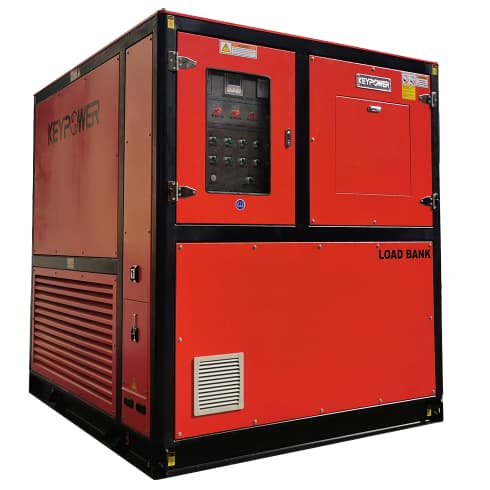
Before applying electrical loads, confirm that the testing equipment and generator are properly configured.
KEYPOWER provides Load Bank Solutions for controlled generator testing. The appropriate load bank capacity and configuration should be selected according to the generator rating and test requirements.
Depending on the approved FAT procedure, the generator may be tested at several load levels. Common test points include 25%, 50%, 75%, and 100% of the specified rated load. Additional load steps or duration requirements may be included in the contract.
During each test stage, record and evaluate the following parameters:
The purpose is to determine whether the generator can operate steadily under the specified load conditions without unexpected alarms, shutdowns, or abnormal operating behavior.
For more demanding projects, transient response testing may also be required to evaluate voltage and frequency recovery following sudden load changes. These requirements should be agreed upon before the FAT begins.
After testing, compare the recorded readings with the generator's technical specifications, applicable standards, and contractual acceptance limits.
A load bank test should not be considered successful simply because the generator starts and produces electricity. The recorded data should demonstrate that the unit operates within the agreed performance limits throughout the test.
For more information about this testing equipment, buyers can also review KEYPOWER's KPLB-100 100kW Resistive Load Bank.
Safety protection tests help confirm that the diesel generator can respond appropriately when abnormal operating conditions occur. These tests should follow the approved test procedure and must not expose personnel or equipment to unnecessary risks.
Important inspection points include:
Not every generator uses identical protection settings. The actual alarm and shutdown thresholds should be checked against the engine, alternator, controller, and project documentation.
Once the physical inspections and functional tests are completed, the final stage is to review the test records and supporting documents. Proper documentation gives buyers traceable evidence of the generator's condition and test results before shipment.
The following documents may be required depending on the purchase agreement and project specifications:
Before signing the FAT acceptance report, the buyer and manufacturer should review any outstanding issues. If a test does not meet the agreed criteria, the issue should be documented, corrected, and retested where necessary.
For technical references and product documentation, buyers can visit the KEYPOWER Generator Download Center, which provides generator catalogs, manuals, and related resources.
Even when a detailed inspection checklist is available, some important items may still be overlooked. Buyers and inspection teams should pay attention to the following common mistakes:
A clean and well-assembled generator does not automatically mean it can deliver the required electrical output. Visual inspection should always be supported by functional and performance testing.
Using general industry expectations instead of the actual purchase agreement may lead to disagreements during acceptance. Always refer to the approved specification, drawings, and applicable standards.
Verbal confirmation is not a substitute for documented test results. Voltage, frequency, current, power, engine parameters, and any abnormal conditions should be recorded during the FAT.
A generator may pass its operational tests but still have missing accessories, incomplete manuals, or incorrect documentation. These items should be checked before final acceptance and shipment.
As a power generation equipment manufacturer established in 1998, KEYPOWER operates a manufacturing facility in China covering more than 66,000 square meters, with an annual production capacity of 5,000 units. The company supplies diesel generator sets using engines from multiple established manufacturers for customers in different industries and markets.
For international buyers, a clear factory inspection and acceptance process helps ensure that the supplied generator configuration matches the agreed project requirements.
Whether you are sourcing a standby diesel generator for commercial facilities, a prime power solution for industrial operations, or a containerized generator for demanding project applications, it is important to clarify the FAT scope before production and shipment.
When requesting a quotation, buyers should provide the required power rating, voltage, frequency, application, engine preference, enclosure type, and any specific testing requirements. This allows the manufacturer to prepare an appropriate technical proposal and inspection plan.
Contact KEYPOWER's Generator Team to discuss your diesel generator requirements, factory testing arrangements, and pre-shipment inspection needs.
FAT stands for Factory Acceptance Test. It is a series of inspections and performance tests conducted at the manufacturer's facility to verify that a diesel generator meets the approved technical specifications and contractual requirements before shipment.
A typical diesel generator FAT checklist includes equipment identification, visual inspection, engine and alternator checks, electrical connections, control panel functions, load bank testing, safety protection verification, and documentation review.
Load bank testing is commonly included in generator FAT when required by the project specification or purchase agreement. It helps verify generator output, voltage and frequency stability, and operating behavior under controlled electrical loads.
Common load test points include 25%, 50%, 75%, and 100% of rated load. The actual load steps and test duration depend on the generator specifications, applicable standards, and customer-approved FAT procedure.
The duration depends on generator capacity, test scope, load bank requirements, and inspection arrangements. A basic inspection may take less time than a comprehensive FAT involving multiple load stages, protection tests, and third-party witnessing. The schedule should be agreed upon before testing.
Buyers commonly request an approved FAT report, load bank test records, equipment datasheets, engine and alternator documentation, electrical inspection results, operation and maintenance manuals, wiring diagrams, and other documents specified in the contract.



 IPv6 network supported
 English
 English
 français
 Deutsch
 русский
 español
 português
 Nederlands
 العربية
 Polski
 中文