
Blog
Fuel consumption is one of the most important factors to consider when selecting and operating a diesel generator. Whether a generator is used for construction sites, industrial facilities, commercial buildings, or emergency backup power, understanding how much fuel it consumes helps businesses estimate operating costs, plan refueling schedules, and select the right generator capacity.
So, how much diesel does a generator use per hour? The answer depends on its rated power, actual electrical load, engine specifications, and operating conditions. This guide explains how generator fuel consumption is measured, how to read a fuel consumption chart, and how to estimate daily fuel requirements using real generator specifications from KEYPOWER.
Generator fuel consumption refers to the amount of fuel a generator uses during a specific operating period, usually measured in liters per hour (L/h) for diesel generators.
For example, if a diesel generator consumes 20 liters of fuel per hour, it will theoretically use 160 liters during eight hours of continuous operation at the same operating condition.
Fuel consumption is commonly presented in two ways:
For equipment buyers and project managers, hourly fuel consumption is particularly useful because it helps estimate fuel storage requirements, operating budgets, and refueling intervals.
Generator fuel consumption varies significantly with generator capacity and engine configuration. A larger generator generally consumes more fuel per hour, although its fuel consumption per unit of electricity generated may differ.
The following table provides actual reference figures from selected KEYPOWER diesel generator models. These figures are listed at 100% load on the corresponding product specifications.
| Generator Model | Prime Power | Engine | Fuel Consumption (L/h) |
|---|---|---|---|
| KP-16P | 12.8 kW | 4DW81-23D | 4.6 |
| KP-30P | 24 kW | 4DW92-39D-HMS20W | 8.7 |
| KP-50P | 40 kW | 4DX22-65D-HMS20W | 12.7 |
| KP-60P | 48 kW | 4DX23-78D-HMS20W | 14.3 |
These examples come from the KEYPOWER FAWDE diesel generator range. They illustrate how fuel consumption increases with rated generator output.
It is important to understand that these are model-specific figures, not universal consumption rates for every generator with the same kW rating. Actual fuel consumption should be confirmed against the manufacturer's technical specifications and the intended operating load.
Generator load is one of the main factors influencing hourly fuel consumption. The electrical load determines how much power the engine needs to produce, which directly affects the amount of diesel required.
When a generator operates with only a small portion of its rated capacity, its fuel consumption per hour is generally lower than at full load. However, this does not necessarily mean it is operating efficiently.
Prolonged operation at very low loads can cause incomplete combustion and carbon deposits in diesel engines. In some applications, this may contribute to wet stacking and other maintenance problems.
At moderate loads, the generator supplies a more substantial portion of its rated output. Fuel consumption increases as the electrical demand rises, but the engine may operate more efficiently per unit of electricity produced compared with prolonged low-load operation.
For facilities with relatively stable power demand, matching generator capacity to the actual load helps maintain a practical balance between fuel consumption and operating performance.
At high loads, the engine must produce more mechanical power to meet electrical demand, resulting in higher hourly fuel consumption.
Continuous operation close to the generator's rated capacity should be evaluated carefully. Buyers should consider starting currents, changing loads, ambient conditions, and the difference between prime and standby power ratings when selecting a generator.
For projects that require performance verification under different electrical loads, KEYPOWER also provides resistive and inductive load banks for generator testing.
Estimating diesel consumption is straightforward when the hourly fuel consumption rate is available.
Basic formula:
Total Fuel Consumption (L) = Hourly Fuel Consumption (L/h) × Operating Hours (h)
For example, consider a generator with a specified fuel consumption of 12.7 L/h operating for 10 hours.
This calculation provides a straightforward estimate for fuel planning. For a more accurate operating budget, use the fuel consumption rate corresponding to the actual load rather than automatically applying the full-load figure.
Once the expected fuel consumption is known, operating expenses can also be calculated.
Daily Fuel Cost = Hourly Fuel Consumption × Daily Operating Hours × Diesel Price per Liter
For example, if a generator consumes 12.7 L/h, operates eight hours per day, and diesel costs $1.00 per liter:
12.7 × 8 × $1.00 = $101.60 per day.
For a 30-day operating schedule, the estimated fuel cost would be $3,048, assuming the same operating conditions every day.
This calculation helps project managers compare generator operating costs and estimate the long-term expenses of different equipment options.
Two generators with similar rated power may have different fuel consumption figures. The following factors should be considered when evaluating generator efficiency.
Engine technology, combustion design, fuel injection systems, and maintenance condition all influence fuel efficiency. Different engine manufacturers may offer different fuel consumption characteristics even at similar power ratings.
KEYPOWER offers diesel generator configurations using engine brands such as Cummins, Perkins, FAWDE, Weichai, SDEC, and other manufacturers. Comparing the technical specifications of individual models is more useful than choosing based on brand name alone.
High ambient temperatures, high altitudes, restricted ventilation, and dusty environments can affect engine performance and generator output. Depending on site conditions, derating may be required to maintain reliable operation.
For this reason, generator selection should take the actual installation environment into account rather than relying only on the rated power shown in a product catalog.
Dirty air filters, clogged fuel filters, poor injector condition, and delayed maintenance can negatively affect combustion and operating performance.
Using suitable diesel fuel, following the manufacturer's maintenance schedule, and checking the fuel and air systems regularly can help maintain stable generator performance.
An oversized generator may spend much of its operating life at a low load, while an undersized unit may struggle to meet peak demand. Both situations can create operational challenges.
Before purchasing a generator, calculate the connected load, identify essential equipment, consider motor starting requirements, and allow for reasonable future expansion.
Reducing fuel consumption does not simply mean running a generator at the lowest possible load. The goal is to achieve reliable power generation while avoiding unnecessary fuel use.
For applications requiring continuous or extended operation, these measures can help improve fuel management and reduce avoidable operating expenses.
Fuel tank capacity is another important consideration when planning generator operation. A suitable tank should provide enough fuel for the required runtime while accounting for safe filling limits and site-specific installation requirements.
For example, KEYPOWER's fuel tank range includes several capacities:
These specifications demonstrate why gross tank volume and usable fuel capacity should not be treated as the same value.
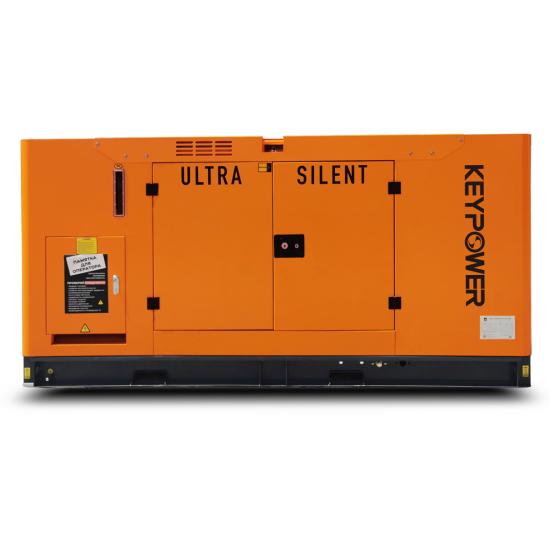
For longer operating periods, buyers can explore KEYPOWER diesel fuel tanks to compare available capacities and configurations.
To estimate the required usable fuel capacity, multiply the expected hourly fuel consumption by the planned operating hours, then account for the manufacturer's recommended reserve and safe filling limits.
For industrial buyers, fuel efficiency should be evaluated alongside generator reliability, rated output, engine selection, maintenance requirements, and project operating conditions.
Before making a purchasing decision, consider the following points:
KEYPOWER provides diesel generator solutions for industrial facilities, construction projects, commercial buildings, and other power applications. Buyers can explore the diesel generator range to compare power ratings, engine configurations, and published fuel consumption specifications.
For project-specific requirements, it is advisable to provide the expected load, operating hours, frequency, voltage, and installation conditions when requesting a quotation. This allows the supplier to recommend a more suitable generator configuration.
Diesel generator fuel consumption depends on rated power, engine design, and operating load. For example, KEYPOWER's KP-50P generator has a published fuel consumption rate of 12.7 L/h at 100% load. Actual consumption at other load levels may differ.
Multiply the generator's hourly fuel consumption rate by its operating hours. For example, a generator consuming 15 liters per hour will use approximately 120 liters over eight hours at the same operating condition.
Generally, hourly fuel consumption decreases as electrical load decreases. However, fuel efficiency per kilowatt-hour does not necessarily improve at very low loads. Prolonged low-load operation may also cause problems in diesel engines.
Prime power is intended for applications with variable loads and specified operating conditions, while standby power is designed for emergency or backup use during utility outages. The applicable rating and operating limits depend on the generator manufacturer's specifications.
Multiply the expected hourly fuel consumption by the required operating hours. Then allow for the manufacturer's recommended reserve and safe filling limits. Always distinguish between gross tank volume and usable fuel capacity.
Select a generator that matches the actual load, avoid prolonged low-load operation, maintain the engine regularly, monitor fuel consumption, and plan operating schedules efficiently.
Total fuel consumption increases with operating hours. However, the hourly consumption rate depends on the generator's load, engine condition, and operating environment.
Understanding generator fuel consumption helps businesses make better decisions about equipment selection, fuel storage, and long-term operating costs. By comparing actual manufacturer specifications and matching generator capacity to project requirements, buyers can achieve more reliable and cost-effective power generation.
Looking for a diesel generator for your next project? Contact KEYPOWER to discuss your power requirements and find a suitable generator solution.



 IPv6 network supported
 English
 English
 français
 Deutsch
 русский
 español
 português
 Nederlands
 العربية
 Polski
 中文