
Blog
When comparing kW vs kVA for a generator, the key difference is that kW measures real power, while kVA measures apparent power. For most three-phase diesel generators rated at a power factor of 0.8, kW equals kVA multiplied by 0.8. Understanding this relationship helps businesses calculate their actual power requirements, compare generator specifications, and avoid selecting an undersized or unnecessarily large generator.
For industrial facilities, commercial buildings, construction sites, and backup power applications, both ratings matter. KEYPOWER provides diesel generator sets with specified prime and standby power ratings, helping buyers evaluate generator capacity according to their intended application.
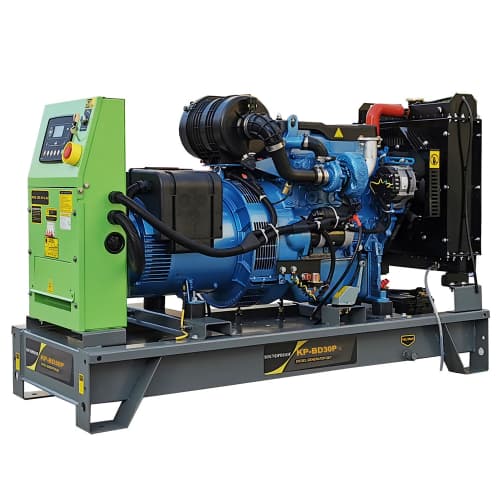
kW (kilowatts) measures real power, which is converted into useful work, such as running motors, lighting, pumps, and electronic equipment.
kVA (kilovolt-amperes) measures apparent power, calculated from electrical voltage and current. It represents the overall electrical capacity required to supply a load, including the effects of reactive power.
The relationship between these values is expressed as follows:
kW = kVA × Power Factor
kVA = kW ÷ Power Factor
For example, a generator rated at 100 kVA with a power factor of 0.8 provides 80 kW of real power at that rating. The difference does not mean that 20 kW is simply wasted; it reflects the distinction between real and apparent power in an AC electrical system.
When comparing generator capacities, buyers should check both ratings rather than relying on a single number. Explore KEYPOWER's 50Hz diesel generator range to review available generator options.
To convert kW to kVA, divide the required real power by the power factor. To convert kVA to kW, multiply apparent power by the power factor.
| Calculation | Formula | Example at 0.8 PF |
|---|---|---|
| kW to kVA | kW ÷ 0.8 | 80 kW ÷ 0.8 = 100 kVA |
| kVA to kW | kVA × 0.8 | 100 kVA × 0.8 = 80 kW |
| kW to kVA | kW ÷ 0.8 | 120 kW ÷ 0.8 = 150 kVA |
These examples assume a power factor of 0.8. Always confirm the power factor stated on the generator's nameplate or technical datasheet. If the actual load operates at a different power factor, the conversion will change.
It is also important to distinguish generator capacity from the power consumed by equipment. A generator rated at 100 kVA does not automatically deliver 100 kW of real power when its rated power factor is 0.8.
Choosing the right generator involves more than converting kW into kVA. You need to calculate the expected running load, account for starting currents, and determine whether the generator will serve as a primary power source or emergency backup.
Start by listing all equipment that may operate simultaneously. Include motors, HVAC systems, pumps, lighting, computers, production machinery, and other essential loads. Add their running power requirements, then evaluate the starting demands of equipment with motors or other high-inrush loads.
For a preliminary estimate, suppose a facility requires 80 kW of real power and the design power factor is 0.8:
Estimated apparent power
80 kW ÷ 0.8 = 100 kVA
A 100 kVA rating is the theoretical starting point for this calculation, not a final selection. Motor starting requirements, load fluctuations, ambient temperature, altitude, and the applicable generator rating may require a different capacity.
For a reliable selection, buyers should also review load-step performance, voltage regulation, phase balance, and the expected operating profile. Where several large motors start simultaneously, a load assessment by a qualified electrical engineer can help determine the appropriate generator size.
Generator datasheets commonly show both prime power and standby power in kW and kVA. These figures describe different operating ratings and should not be treated as interchangeable.
For example, KEYPOWER's KP-B30P 50Hz, 24 kW / 30 kVA Baudouin diesel generator lists a prime power rating of 24 kW / 30 kVA and a standby power rating of 26.4 kW / 33 kVA.
The prime rating follows the standard 0.8 power-factor relationship: 30 kVA × 0.8 = 24 kW. The standby rating follows the same relationship: 33 kVA × 0.8 = 26.4 kW.
These ratings illustrate why buyers should compare prime power with prime power and standby power with standby power. The appropriate model depends on the site's load profile, starting requirements, environmental conditions, and operating schedule.
Buyers comparing different engine brands and capacity ranges can explore KEYPOWER's BAUDOUIN diesel generator models to review available ratings and technical specifications.
Several common selection mistakes can lead to insufficient power capacity or unnecessary equipment costs.
A well-sized generator should meet the required real and apparent power demands while maintaining acceptable voltage and frequency performance. Avoid choosing a unit based on its headline kVA value alone.
For a practical generator selection, prepare the following information before requesting a quotation:
With this information, the supplier can evaluate the required kW and kVA ratings, operating conditions, and suitable generator configurations. Buyers can explore KEYPOWER diesel generator solutions and contact the team for model-specific specifications and selection support.
The key takeaway is straightforward: kW tells you how much real power a generator can provide, while kVA describes its apparent power capacity. Use both ratings, confirm the power factor, and select the generator according to the actual load and operating duty rather than relying on a single number.
Is kW or kVA more important when choosing a generator?
Both are important. kW indicates the real power available to operate equipment, while kVA indicates apparent power capacity. Check both values against the load requirements and the generator's specified power factor.
How many kW is a 100 kVA generator?
At a power factor of 0.8, a 100 kVA generator corresponds to 80 kW of real power. The actual usable output depends on the generator's ratings, load characteristics, and operating conditions.
What is the formula to convert kW to kVA?
Divide kW by the power factor. For example, 80 kW divided by 0.8 equals 100 kVA. Use the power factor specified for the generator or load rather than assuming it is always 0.8.
Why do generators have separate prime and standby ratings?
Prime power is intended for specified variable-load operating conditions, while standby power is intended for emergency operation when the normal power source fails. Their operating limits and permitted running hours differ.
How do I choose the correct diesel generator size?
Calculate the expected running load, check motor starting demands, confirm the voltage and frequency, and determine whether prime or standby operation is required. A qualified supplier or electrical engineer can help verify the final capacity.



 IPv6 network supported
 English
 English
 français
 Deutsch
 русский
 español
 português
 Nederlands
 العربية
 Polski
 中文